Birth Name
Volodymyr Ivanovich Palahniuk
Birth Date
1919 February 18
Birth Location
Lattimer Mines, Pennsylvania, USA
Height
192 cm
Professions
Also Known As
- J. Palance
- Walter Jack Palance
- Walter {Jack} Palance
- Walter Palance
IMDb ID
Wikipedia Article
# Jack Palance
Jack Palance was a celebrated American actor known for his commanding presence and versatility in both film and television. Born on February 18, 1919, in Lattimer Mines, Pennsylvania, Palance stood tall at 192 cm and carved out a remarkable career that spanned several decades. He was not only an actor but also a director and producer, recognized for his contributions to the entertainment industry. Palance's distinct voice, rugged features, and ability to portray a wide range of characters made him a notable figure in Hollywood history.
Quick Facts
Jack Palance, born as Walter Jack Palance, entered the world on 18 2 1919. Hailing from Lattimer Mines, Pennsylvania, USA, he achieved a height of 192 and worked primarily as an actor, producer, and director. His career spanned over six decades, and he was often known for his roles in Westerns and dramatic films.
Early Life and Education
Jack Palance was born into a family of Ukrainian descent, the son of a coal miner and a homemaker. Growing up in the small town of Lattimer Mines, he faced the harsh realities of life in a mining community, which shaped his robust character and instilled in him a sense of resilience. From an early age, Palance exhibited a keen interest in sports, particularly boxing and football, which later contributed to his physicality on screen.
He attended the University of North Carolina at Chapel Hill, where he initially studied civil engineering but later shifted his focus to drama. It was during his time in college that Palance's passion for acting blossomed. After serving in the U.S. Army Air Forces during World War II, he returned to pursue his career in acting, ultimately moving to New York City to study at the Actors Studio under the influential coach Lee Strasberg. This training would become a cornerstone of his craft, allowing him to develop the intense and dynamic performances that would define his career.
Career
Palance's acting journey began on the stage, where he appeared in various productions before making his film debut in the late 1940s. His first notable role came in the 1949 film "Force of Evil," where he showcased his talent for portraying complex characters. However, it was his performance in "Shane" (1953) that solidified his status as a leading man in Hollywood. As the villainous Jack Wilson, Palance captivated audiences with his menacing demeanor and unique charisma, forever etching his name in the annals of classic Western cinema.
Throughout the 1950s and 1960s, Palance continued to find success in a variety of genres, earning critical acclaim for his roles in films such as "Sudden Fear" (1952), for which he received an Academy Award nomination, and "The Big Knife" (1955). His ability to seamlessly transition between leading roles and character parts showcased his versatility as an actor.
The peak of Palance's career came in the 1970s and 1980s, during which he starred in numerous iconic films, including the classic Western "The Professionals" (1966) and the fantasy adventure "The Last Samurai" (1974). He also made a notable appearance in "City Slickers" (1991), which revitalized his career and introduced him to a new generation of fans. His portrayal of the grizzled cowboy Curly Washburn earned him an Academy Award for Best Supporting Actor, a crowning achievement that underscored his enduring talent.
In addition to his acting work, Palance ventured into producing and directing. He directed the film "The Greatest" (1977), which focused on the life of boxing legend Muhammad Ali. His experience in both front of and behind the camera provided him with a well-rounded perspective on the filmmaking process.
In the later years of his career, Palance continued to take on diverse roles in both film and television. He appeared in various made-for-TV movies and miniseries, demonstrating his adaptability and commitment to his craft. His performances remained impactful, and he was often sought after for roles that required a seasoned actor with a commanding presence.
Personal Life
Jack Palance's personal life was as dynamic as his professional career. He was married three times, first to actress Virginia Baker, with whom he had a son, and later to Elaine Rogers, with whom he had two daughters. His third marriage to the beautiful actress and model, Melissa, was one of the most significant in his life, lasting until his death in 2006.
Known for his rugged charm and undeniable charisma, Palance had a reputation for being a bit of a loner. He was deeply passionate about the arts, often indulging in painting and sculpting when he was not in front of the camera. His lifestyle reflected a blend of rugged individualism and artistic sensibility, qualities that endeared him to fans and colleagues alike. Palance was also known for his love of the outdoors, often expressing a desire to escape the hustle and bustle of Hollywood for the tranquility of nature.
Appearance
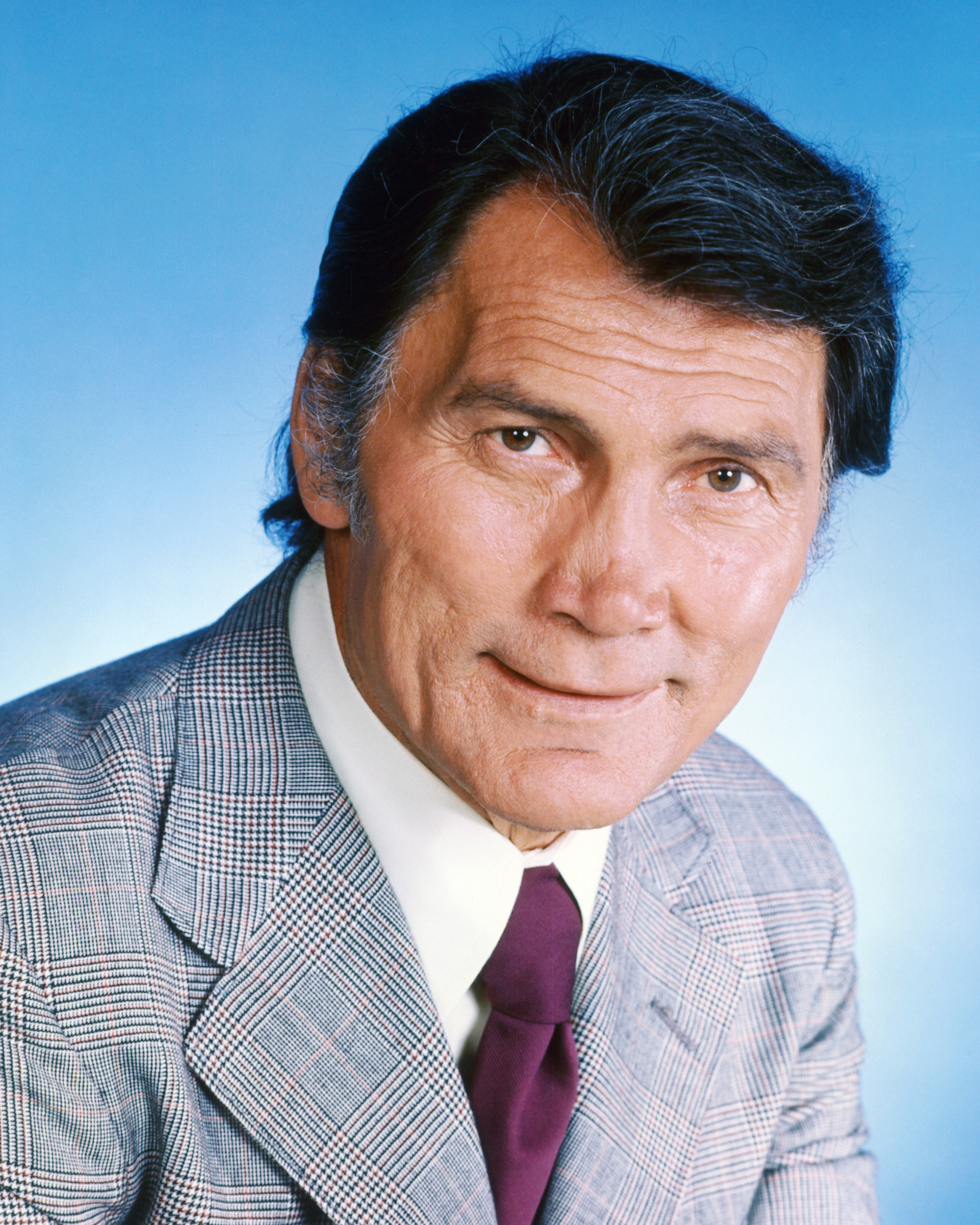
Palance possessed a striking physical appearance that contributed to his success in Hollywood. Standing at 192, his tall and athletic frame made him a natural fit for action-oriented roles. His rugged features, including high cheekbones and intense eyes, lent themselves to a wide array of characters, particularly those with a menacing or brooding presence.
Throughout his career, Palance's hairstyle evolved significantly, often reflecting the trends of the times. In his earlier films, he sported a slicked-back look, typical of the 1950s, while later roles showcased a more tousled, rugged appearance. His physicality was often complemented by a distinctive wardrobe that underscored his roles, whether it be the classic cowboy attire of Westerns or the sharp suits of contemporary dramas.
Palance was not known to have any significant tattoos, which was somewhat typical for actors of his era, who often embraced a more traditional appearance. His natural charisma and strong physical presence were enough to captivate audiences without the need for body art.
Filmography Overview
Jack Palance's filmography is extensive and varied, encompassing a wide range of genres from Westerns to dramatic thrillers. He became synonymous with the archetypal villain, often portraying characters that were complex and morally ambiguous. His roles in Westerns, in particular, left a lasting impression, establishing him as one of the definitive faces of the genre.
In addition to his work in film, Palance made numerous appearances on television, including guest spots on popular series and notable miniseries. He often portrayed characters that required a strong presence, further showcasing his versatility and ability to engage audiences across different mediums.
Awards and Achievements
Throughout his illustrious career, Jack Palance received multiple accolades and nominations that recognized his contributions to the film industry. His most notable achievement was winning the Academy Award for Best Supporting Actor for his role in "City Slickers," which reaffirmed his status as a respected figure in Hollywood.
Palance was also honored with a star on the Hollywood Walk of Fame, a testament to his enduring legacy and impact on cinema. His performances earned him several Golden Globe nominations, and he received critical acclaim for his work in television, including Emmy nominations for his appearances in various television specials and series.
Legacy
Jack Palance's influence on cinema and culture is profound and far-reaching. He is often remembered as one of the quintessential actors of his generation, a figure who embodied the rugged individualism of classic Hollywood while also adapting to the changing landscape of the film industry. His ability to portray complex characters with depth and nuance has left a lasting impact on audiences and aspiring actors alike.
Palance's legacy is characterized by his memorable performances, his distinctive physical presence, and his commitment to his craft. He remains a celebrated figure in the annals of film history, representing a time when actors were often larger than life, both on and off the screen. His contributions to the art of storytelling through film have made him a long-lasting and impactful figure whose work continues to resonate with audiences around the world.
Net Worth
When it comes to estimating the net worth of actors like Jack Palance, the landscape is dotted with various external sources, each vying for attention with their own figures and reasoning. Websites like Celebrity Net Worth, Wealthy Gorilla, TheRichest, and PeopleAi tend to provide rough estimates that can vary dramatically, often leaving fans scratching their heads. For instance, Celebrity Net Worth might suggest Palance had a net worth of around $10 million at the time of his passing, while others might inflate that number by a few million, citing different metrics for calculation. These discrepancies often arise from the methodologies employed—some sites factor in only on-screen earnings while others attempt to include investments, real estate, and other assets. It’s like trying to compare apples to oranges, or in this case, different interpretations of a career that spanned over six decades.
The limitations of these sites are apparent. They often don't account for the nuanced earnings structure in Hollywood, where an actor's net worth can be a reflection of various factors like billing position, the nature of the roles played, and the fluctuating budgets of films over the years. It's not just about the flashy paychecks; the entire ecosystem of film and television compensation plays a role. This is particularly true for actors who have transitioned between film and television, as Palance did, where the pay scales can differ significantly from one medium to another.
So how do we arrive at a more grounded estimate of an actor's earnings? The first thing to consider is the typical compensation structure in Hollywood, especially for supporting actors. In the 1950s and 1960s, the era when Palance was rising to fame, salaries for supporting roles could range anywhere from $5,000 to $50,000 per project depending on the film's budget and the actor's star power. As films became more expensive to produce, those numbers climbed, with established actors like Palance often commanding higher pay due to their experience and recognized talent.
Film budgets also play a crucial role in determining an actor's earnings. A movie with a budget of $100 million will generally allocate a more generous compensation package for its cast than a $10 million indie flick. The size of the role can also impact negotiations, with leading roles fetching significantly more than supporting or minor roles. If an actor is billed as the star, they usually have the leverage to negotiate better pay, while those in smaller parts may have to settle for a flat fee.
Television has its own set of rules. For shows during Palance's time, episode compensation could range from a few thousand dollars for guest appearances to much larger sums for lead roles in successful series. As Palance transitioned into television later in his career, his earnings would have reflected the demand for his seasoned talent, especially with shows like "Ripley's Believe It or Not!" where he served as host.
To sum it all up, understanding an actor's earnings isn't just about the dollar signs; it's about the entire ecosystem of compensation in the entertainment industry. Now let's take a closer look at some of Jack Palance's major films, their approximate budgets, and my estimated earnings for him in each film.
```html
| Film Title | Approximate Budget | Estimated Earnings |
|---|---|---|
| Shane | $3 million | $25,000 |
| City Slickers | $45 million | $1 million |
| Batman | $35 million | $750,000 |
| The Professionals | $6 million | $50,000 |
| Dragonslayer | $18 million | $200,000 |
```
Now, let’s dive into the nitty-gritty of each major film and how I arrived at those estimated earnings. Starting with "Shane," a classic Western released in 1953, Palance played the menacing Jack Wilson. Given the film's budget of around $3 million—a considerable amount for its time—his estimated earnings were likely around $25,000, a standard figure for supporting roles in films of that era.
Fast forward to 1991's "City Slickers," a comedy that grossed over $180 million worldwide. With a budget of $45 million, Palance’s role as the grizzled cowboy Curly was pivotal. Given his stature in the industry at that point, I estimate he pocketed around $1 million for this role, reflecting his status and the film's success.
In Tim Burton’s 1989 "Batman," Palance portrayed the mob boss, Carl Grissom. This was a big-budget affair with around $35 million, and I estimate he earned about $750,000. His billing and the film's blockbuster status surely gave him leverage in negotiations.
"The Professionals," released in 1966, had a modest budget of $6 million. Given that Palance was a well-known face by then, I’d place his earnings at around $50,000. Finally, in "Dragonslayer," a fantasy film from 1981, the budget stood at $18 million. I estimate Palance earned around $200,000, as fantasy films often commanded higher salaries due to their specialized nature.
Considering Palance's work in television, his role in "Ripley's Believe It or Not!" would likely have seen him earning a per-episode fee that could range from $20,000 to $50,000, depending on the show's popularity and his billing.
Now, if we sum up these estimated earnings, we see a rough lifetime earnings figure. Adding up the estimates brings us to around $2.25 million from these films alone, not including potential fees from television and other projects. This figure, while substantial, is still relatively modest compared to what many contemporary actors earn today, which aligns with some of the lower estimates found on those external net-worth websites.
In conclusion, the value of Jack Palance's career can be seen through both the lens of external sources and a deeper analysis of his work. While estimates from celebrity net worth sites might place his total net worth around the $10 million mark, a more nuanced approach based on his film roles, earnings from television, and the industry context suggests a realistic range closer to $5 million to $8 million. This takes into account the scarcity of blockbuster roles as his career progressed, and the urgency for studios to secure seasoned talent like Palance in their productions. Ultimately, there’s a lot more to an actor's worth than just the numbers on a page; it’s about the impact they’ve had on the industry and the audiences who continue to value their work.