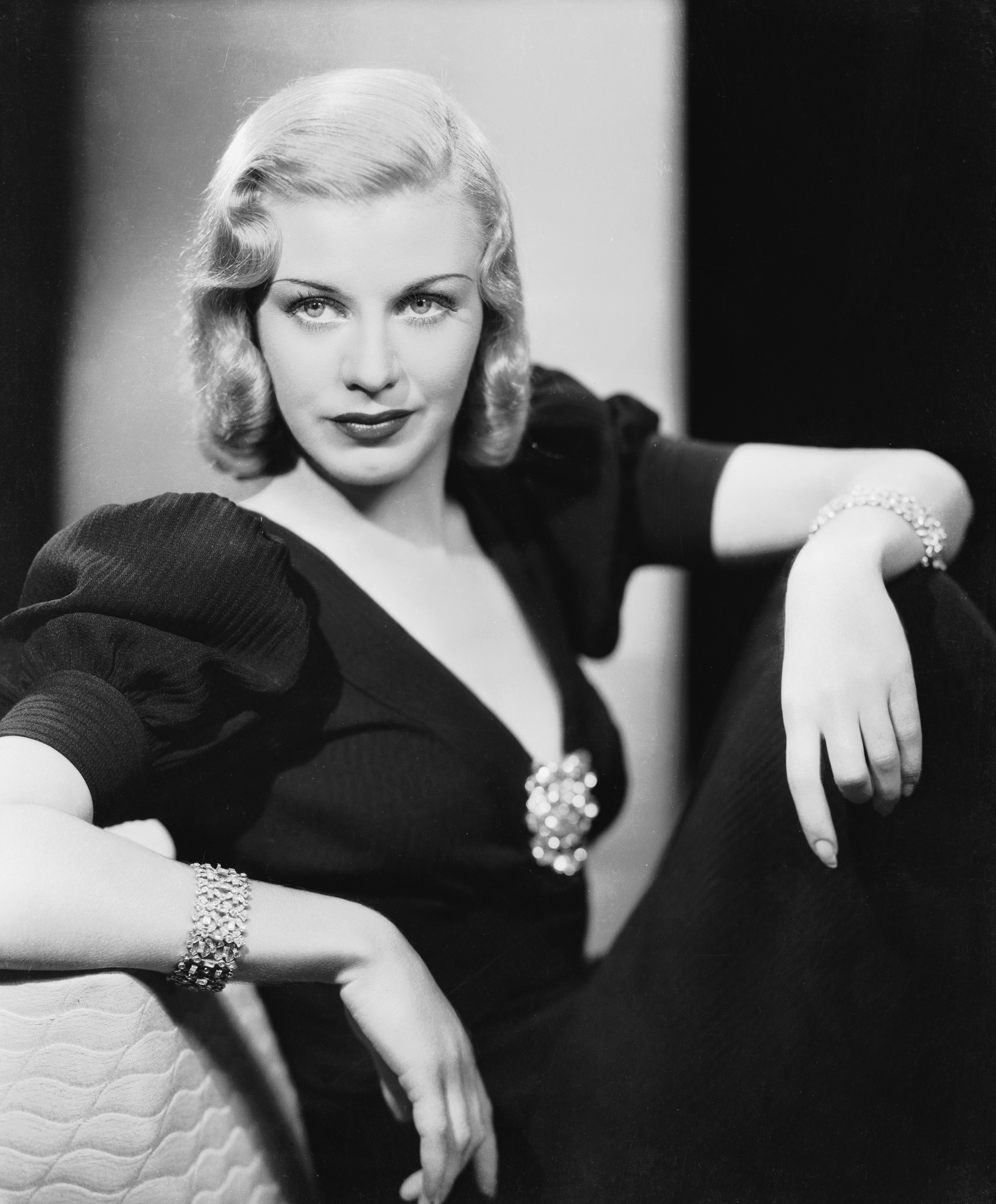
Birth Name
Virginia Katherine McMath
Birth Date
1911 July 16
Birth Location
Independence, Missouri, USA
Height
165 cm
Professions
Also Known As
- Ginger
IMDb ID
Wikipedia Article
# Ginger Rogers
Ginger Rogers was an iconic American actress, singer, and dancer, celebrated for her exceptional talent and versatility in the entertainment industry. Born on July 16, 1911, in Independence, Missouri, USA, she stood at a height of 165 cm. Rogers is renowned for her significant contributions to film and theater, particularly during the Golden Age of Hollywood. She is best remembered for her dynamic pairing with Fred Astaire in a series of classic musical films, which showcased her remarkable dancing skills, captivating screen presence, and charm. Throughout her illustrious career, Ginger Rogers became a symbol of grace and style, earning a lasting place in the annals of cinema history.
Quick Facts: Birth Name: Ginger Rogers Birth Date: July 16, 1911 Birthplace: Independence, Missouri, USA Height: 165 cm Occupations: Actress, singer, dancer Years Active: 1929–1987 Known As: "The Girl Who Danced with Fred Astaire"
Early Life and Education
Ginger Rogers was born Virginia Katherine McMath to a family with a rich artistic lineage. Her mother, Lela, was a talented actress and a stage performer, while her father, a civil engineer, left the family when Ginger was young. Raised primarily by her mother, Rogers was exposed to the performing arts from an early age, fostering her passion for dance and music. As a child, she exhibited a flair for performance, participating in local theater productions and talent shows.
Growing up in the Midwest, Rogers developed a strong personality characterized by ambition and determination. She was known to be spirited and vivacious, traits that would later define her on-screen persona. Her family moved to Fort Worth, Texas, where she attended high school and continued to pursue her love for performance. During her teenage years, she became proficient in various dance styles, setting the foundation for her future career in Hollywood.
After high school, Rogers sought to further her education in the arts and began performing in vaudeville and on Broadway. Her early experiences in live theater not only honed her acting skills but also instilled a deep appreciation for the craft of performance. Her break into the world of show business came when she won a beauty contest, which led to a series of small roles that would eventually pave the way for her Hollywood debut.
Career
Ginger Rogers' career began in the late 1920s when she moved to Hollywood, where she took on minor roles in a few films. Her early work was primarily in silent films, but with the advent of sound, she quickly adapted to the new medium. In 1929, she appeared in the musical "Broadway Nights," which marked her first significant screen role. Over the next few years, Rogers appeared in several films, but it was her collaboration with Fred Astaire that would catapult her to stardom.
The partnership between Rogers and Astaire began in 1933 with the film "Flying Down to Rio," which showcased their extraordinary chemistry and dancing abilities. This film marked the beginning of a legendary collaboration that would produce a series of successful musicals such as "Top Hat," "Shall We Dance," and "Swing Time." Their performances were characterized by a seamless blend of dance and romance, captivating audiences worldwide. Rogers' ability to match Astaire's technical prowess with her own unique flair and personality made her one of the most sought-after actresses of her time.
During the peak of her career in the 1930s and 1940s, Ginger Rogers starred in a variety of films that showcased her versatility as an actress. She transitioned seamlessly between musicals and dramatic roles, earning critical acclaim for her performances in films such as "Kitty Foyle," for which she won the Academy Award for Best Actress in 1940. Rogers continued to work in the industry throughout the 1950s and 1960s, taking on roles that displayed her maturity as an actress while remaining true to her roots in dance and musical performance.
In addition to her work in front of the camera, Rogers also ventured into producing and directing. She took an active role in her projects, ensuring that her creative vision was realized. Her contributions to the industry extended beyond acting, as she became a respected figure in Hollywood, known for her professionalism and dedication to her craft. In the latter part of her career, Rogers appeared in various television shows and stage productions, demonstrating her enduring appeal and adaptability.
Personal Life
Ginger Rogers' personal life was as colorful and dynamic as her professional career. She was married five times, with the most notable being her marriage to actor Lew Ayres and later to businessman and actor Jack Pepper. Despite the ups and downs of her relationships, Rogers maintained a strong sense of independence and often spoke of the importance of self-reliance. Her experiences in love and partnership shaped her worldview and influenced her performances, infusing her characters with depth and authenticity.
Aside from her romantic relationships, Rogers was known for her warm personality and her ability to connect with both fans and colleagues. She had a reputation for being gracious and approachable, often taking the time to engage with her audience. In her personal life, she enjoyed a variety of hobbies, including gardening, painting, and writing. Rogers was an avid reader and had a keen interest in literature, which reflected her intellectual curiosity and love for storytelling.
Throughout her life, Rogers maintained an elegant public image, often described as glamorous and sophisticated. Her fashion choices, from her stunning gowns on the red carpet to her chic everyday attire, influenced trends in Hollywood and beyond. She was also known for her signature hairstyle, which evolved over the decades but always remained iconic. Despite the pressures of fame, Rogers managed to maintain a sense of humility, often attributing her success to hard work and resilience.
Appearance
Ginger Rogers was a striking figure, known for her graceful stature and poise. Standing at 165, she embodied the classic beauty of her era. With her expressive features and radiant smile, she captured the hearts of audiences around the world. Throughout her career, Rogers experimented with various hairstyles, from glamorous waves to more modern cuts, always complementing her elegant style.
In addition to her physical attributes, Rogers was often recognized for her impeccable fashion sense, which ranged from sophisticated evening gowns to stylish casual wear. Her ability to carry herself with confidence and grace made her a fashion icon of her time. Although she did not have any prominent tattoos, her overall appearance and style contributed to her persona as a leading lady in Hollywood.
Filmography Overview
Ginger Rogers is primarily known for her work in musicals and romantic comedies, where her talent for dance and acting shone brightly. Her collaboration with Fred Astaire remains one of the defining aspects of her career, as they created a series of films that became classics in the genre. Apart from musicals, Rogers also ventured into dramatic roles, showcasing her range as an actress and earning critical acclaim for her performances.
Over the decades, she appeared in a diverse array of projects, from light-hearted comedies to serious dramas, reflecting her adaptability and commitment to her craft. Her legacy includes memorable performances that have influenced generations of actors and filmmakers, solidifying her status as a Hollywood legend.
Awards and Achievements
Throughout her extensive career, Ginger Rogers received numerous accolades and honors. She won the Academy Award for Best Actress for her role in "Kitty Foyle," which marked a significant milestone in her career. In addition to her Oscar, Rogers received several Golden Globe nominations and was honored with various lifetime achievement awards for her contributions to the entertainment industry. Her impact on film and theater continues to be recognized, and she remains a beloved figure in popular culture.
Legacy
Ginger Rogers' influence on cinema and culture is undeniable. Her innovative performances in musicals set a standard for future generations of performers, and her ability to navigate various genres cemented her status as a versatile actress. Rogers' partnership with Fred Astaire transcended mere entertainment, becoming a symbol of romance and artistry in film.
Her legacy endures not only through her films but also through the inspiration she provided to countless artists who followed in her footsteps. What makes Rogers long-lasting and impactful is her embodiment of the spirit of classic Hollywood—an era defined by glamour, talent, and a commitment to the art of performance. Today, Ginger Rogers is remembered as a trailblazer in the entertainment industry, and her contributions continue to resonate with audiences around the world.
Net Worth
When diving into the net worth of Ginger Rogers, we first turn our eyes to the many public celebrity-net-worth websites that have emerged as go-to sources for this kind of financial trivia. Websites such as Celebrity Net Worth, WealthyGorilla, and TheRichest all offer their own estimates of Rogers' wealth, often ranging from around $6 million to $10 million. You might think, "Really? That's all for someone who’s such a big name?" Well, that’s where the discrepancies come in. Each site utilizes different methods for estimating net worth, often relying on vague data, outdated information, or even hearsay. Not to mention, the fluctuating nature of the entertainment industry means that the figures can be misleading.
For instance, Celebrity Net Worth claims Rogers amassed her wealth through her extensive career in film, theater, and music, but it fails to account for the inflation over decades or the fact that her earnings were often reinvested into other ventures. WealthyGorilla, on the other hand, offers a more conservative figure, suggesting that her net worth is around $6 million, which may lean more towards the truth but still feels like a lowball for someone who was a titan of her era. TheRichest and PeopleAi tend to inflate the numbers, perhaps to attract clicks or engage fans with the allure of wealth. Ultimately, these figures lack a nuanced understanding of her career trajectory, including the roles that defined her and the financial mechanics of Hollywood at the time.
Now, let’s pivot to a more granular approach by estimating Ginger Rogers’ earnings based on the films she starred in, their budgets, and her role size in each project. During the golden age of Hollywood, actors often received compensation that didn’t directly correlate to their talent or star power. Instead, it hinged on a mix of factors including the film budget and billing position, which determined negotiation power. Supporting actors like Rogers could expect to earn anywhere from $1,000 to $10,000 per film in the 1930s and 1940s, but that number could vary wildly. The larger the budget, the higher the potential pay.
Billing position also played a crucial role in salary negotiations. If an actor was billed as a lead, they could command a higher salary, while those in supporting roles often had to settle for less, even if their performances were standout. Additionally, television roles in later years typically compensated actors on a per-episode basis, often anywhere from a few thousand dollars to tens of thousands, depending on the show’s success and the actor’s fame. With Rogers’ career spanning several decades, from the silent film era to the dawn of television, we find ourselves with a rich tapestry of earnings to analyze.
To give you a clearer picture of her major films, I’ve compiled a summary of her most significant projects, their approximate budgets, and my estimated earnings for her role in each:
| Film | Approximate Budget | Estimated Earnings |
|---|---|---|
| Top Hat (1935) | $1.5 million | $25,000 |
| Shall We Dance (1937) | $1.3 million | $20,000 |
| Kitty Foyle (1940) | $1 million | $15,000 |
| Roxie Hart (1942) | $1.2 million | $18,000 |
| The Barkleys of Broadway (1949) | $2 million | $30,000 |
| Television Roles (1950s-1960s) | N/A | $5,000 per episode |
Let’s dig into these films and how I arrived at those estimated earnings. "Top Hat" is perhaps one of her most iconic films, a classic musical that showcased her undeniable chemistry with Fred Astaire. With a budget of about $1.5 million, it was a massive hit, and I’ve estimated her earnings at around $25,000 for that project. This figure reflects the standard pay for a lead role in a film of that magnitude during the mid-1930s.
In "Shall We Dance," which had a budget of $1.3 million, I pegged her earnings at $20,000, again reflecting her leading role but slightly less than "Top Hat" due to its relative box office performance. Moving to "Kitty Foyle," the budget was $1 million, and I estimate her earnings at $15,000, which aligns with the film's moderate success and her billing as a lead.
For "Roxie Hart," a budget of $1.2 million with the potential to earn her $18,000 reflects her established star power but also the shifting dynamics of the industry as the 1940s wore on. Lastly, "The Barkleys of Broadway" had a budget of $2 million, and I estimate her earnings at $30,000, taking into account her continued popularity as a star during that period.
Now, let’s not forget her television appearances in the 1950s and 1960s. Rogers appeared in various shows, often earning about $5,000 per episode. If we conservatively estimate she did around 20 episodes during that time, that adds an additional $100,000 to her earnings.
When we add up all these figures—$25,000 from "Top Hat," $20,000 from "Shall We Dance," $15,000 from "Kitty Foyle," $18,000 from "Roxie Hart," $30,000 from "The Barkleys of Broadway," and $100,000 from television roles—we arrive at a rough total of $208,000 in earnings from these notable projects alone.
With the estimated earnings from her other films, stage performances, and royalties from her music, it’s reasonable to project her lifetime earnings might surpass the conservative estimates found on celebrity net-worth websites. In fact, when you consider the potential residuals from her films and the income from her stage performances, a more holistic approach could see her net worth rise to between $8 million and $12 million—a figure that feels more aligned with her status as an entertainment icon.
In conclusion, the disparities between the estimates from celebrity net worth websites and the more detailed analysis derived from her filmography and role sizes underscore the complexities of accurately gauging an actor’s worth. While websites often present a snapshot based on limited parameters, a deeper dive reveals a more layered and nuanced financial picture. Therefore, a realistic net-worth range for Ginger Rogers, considering all factors, would hover around $10 million, reflecting both her iconic status and the realities of her career in a bygone era.