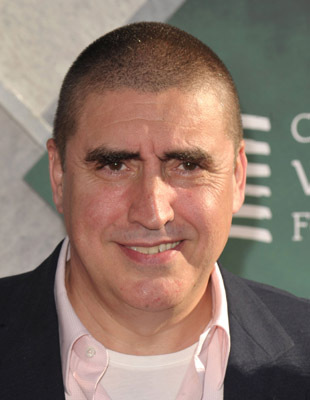
Birth Date
1953 May 24
Birth Location
London, England, UK
Height
189 cm
Professions
IMDb ID
Wikipedia Article
# Alfred Molina
Alfred Molina is a distinguished British-American actor known for his versatility and compelling performances across a wide range of genres. Born on May 24, 1953, in London, England, UK, Molina stands at a height of 189 cm. With a career spanning over four decades, he has established himself as a prominent figure in film, television, and theatre. Molina's ability to embody complex characters has garnered him critical acclaim and a loyal fanbase, making him one of the most respected actors in contemporary cinema.
Quick Facts: Birth Name: Alfred Molina Birth Date: May 24, 1953 Birthplace: London, England, UK Height: 189 cm Occupations: Actor, Producer, Director Years Active: 1976–present Known As: Alfred Molina
Early Life and Education
Alfred Molina was born to a Spanish father and an Italian mother, which contributed to his rich cultural background and shaped his artistic sensibilities from an early age. Growing up in a working-class neighborhood in London, Molina was exposed to a diverse array of influences that would later inform his acting career. His father, a construction worker, and his mother, a homemaker, instilled a strong work ethic in Molina, which he carried into his professional life.
From a young age, Molina showed an inclination towards the arts, often participating in school plays and community theatre. He attended the Guildhall School of Music and Drama, where he honed his craft and developed a passion for acting. It was during this formative period that Molina's personality began to take shape; he was known for his wit and charm, which would later become hallmarks of his public persona. His education provided him with a solid foundation in performance, and he graduated with a commitment to pursue acting as a lifelong career.
Career
Molina's career began in the late 1970s with small roles in British television series and stage productions. He made his television debut in 1976 and quickly became a familiar face on the UK stage, performing in various Shakespearean plays and contemporary works. His early work demonstrated his range and ability to tackle diverse characters, showcasing his talent as a serious dramatic actor.
His breakthrough came in 1981 when he starred in the film "Raiders of the Lost Ark" as the character Satipo, a role that introduced him to a wider audience and showcased his ability to play complex, multifaceted characters. This initial success paved the way for a series of notable performances in films such as "The Accidental Tourist" (1988) and "The Perez Family" (1995).
Throughout the 1990s and into the early 2000s, Molina continued to build his reputation with memorable roles in critically acclaimed films like "Chocolat" (2000), where he portrayed the conflicted and passionate character of the town's mayor, and "Frida" (2002), in which he played Diego Rivera, the iconic Mexican muralist. Molina's portrayal of Rivera earned him widespread recognition and solidified his status as a leading character actor capable of carrying significant dramatic weight.
During his peak career years, Molina also ventured into producing and directing, showcasing his versatility beyond acting. He directed several stage productions, garnering praise for his innovative approaches and understanding of narrative structure. His work in theatre remained a significant part of his career, as he frequently returned to the stage to portray classic roles, demonstrating his commitment to the performing arts.
In recent years, Molina has continued to evolve as an actor, taking on challenging roles in both film and television. One of his most notable recent performances was in the Marvel Cinematic Universe film "Spider-Man: No Way Home" (2021), where he reprised his role as Doctor Otto Octavius, also known as Doc Ock. This return not only delighted long-time fans of the franchise but also showcased Molina's ability to adapt to contemporary storytelling while maintaining the depth of the character he originally portrayed.
Personal Life
Alfred Molina's personal life reflects the same complexity and richness that characterize his roles. He has been married twice, first to actress Jill Gascoine, with whom he shares a son. Their marriage lasted for over two decades until their separation in 2001. He later married actress and producer Marisa Tomei in 2015, which brought joy and companionship into his life.
Molina is known for his down-to-earth personality and his penchant for privacy, often shying away from the tabloid spotlight. Outside of acting, he has a deep appreciation for art, literature, and music, interests that stem from his diverse cultural background. He enjoys cooking and often shares his culinary creations with friends and family, reflecting his love for nurturing those close to him.
In terms of public image, Molina is regarded as a dedicated and professional actor who embodies the spirit of collaboration and creativity. He is known for his humility and respect for the craft, often emphasizing the importance of storytelling and the roles of actors in bringing narratives to life.
Appearance
Alfred Molina's physical presence is as commanding as his performances. Standing at 189, he has a robust build that complements his wide range of roles. His distinctive features, including expressive eyes and a strong jawline, allow him to portray both sympathetic and antagonistic characters with ease.
Molina’s hairstyle has varied throughout his career, from the longer locks of his youth to the more refined styles seen in his later work. He often sports a neatly groomed appearance, which reflects his professionalism and attention to detail. While he does not have any prominent tattoos, his versatility as an actor allows him to transform into various characters, each with their style and persona, effectively showcasing his adaptability.
Filmography Overview
Alfred Molina is known for his extensive and varied filmography, which encompasses a wide range of genres including drama, comedy, and action. His ability to shift seamlessly between leading and supporting roles has made him a sought-after actor in Hollywood. He is particularly noted for his performances in character-driven narratives, often playing complex individuals grappling with moral dilemmas and personal conflicts.
Molina has appeared in numerous films that explore themes of identity, love, and sacrifice. His work in independent cinema, alongside big-budget blockbusters, has allowed him to showcase his range, making him a versatile actor capable of captivating audiences across different platforms. Additionally, his contributions to television series and miniseries reflect his ongoing commitment to storytelling, further enriching his already impressive body of work.
Awards and Achievements
Throughout his career, Alfred Molina has received numerous accolades for his performances, including nominations for prestigious awards such as the Tony Awards, BAFTA, and Golden Globe Awards. His work in both film and theatre has been recognized by critics and peers alike, establishing him as a formidable presence in the entertainment industry. Molina's achievements are not only a testament to his talent but also to his dedication to his craft and his ability to evolve as an artist.
Legacy
Alfred Molina's influence on cinema and culture is profound. He has made significant contributions to the representation of diverse characters in film, often portraying individuals from various backgrounds with depth and authenticity. His ability to traverse genres and embody complex roles has inspired many aspiring actors and filmmakers.
Molina's long-lasting impact is evident in the way he has redefined the character actor's role in Hollywood. His performances resonate with audiences, often leaving a lasting impression that extends beyond the screen. As he continues to take on new challenges, Molina remains a vital figure in the entertainment industry, embodying the spirit of creativity and passion that drives the art of acting.
Through his extensive body of work and commitment to storytelling, Alfred Molina stands as a testament to the enduring power of performance and the transformative nature of cinema. His journey from a young aspiring actor in London to an acclaimed figure in Hollywood is not only a reflection of his talent but also an inspiring narrative of perseverance and dedication to the craft.
Net Worth
When diving into the net worth of a seasoned actor like Alfred Molina, it’s worth noting that the landscape of celebrity net worth estimations is as varied as it is intricate. Websites like Celebrity Net Worth, Wealthy Gorilla, TheRichest, and PeopleAi each throw their hat into the ring, offering figures that range from $8 million to an astonishing $20 million. These discrepancies arise from several factors: the sources of their information, the timing of their data updates, and the methodologies they use for calculation. For example, Celebrity Net Worth often bases its estimates on salary reports and project revenues, while TheRichest might factor in real estate holdings and other investments.
The challenge with these numbers is that they can be somewhat abstract, often lacking the granular detail that would provide a clearer picture of an actor's financial landscape. While some sources may inflate numbers based on speculation or market trends, others may offer a more conservative estimate based on verifiable earnings. This creates a patchwork quilt of financial narratives, some of which may grate on your belief system if you’re looking for a straightforward answer.
To get a better grip on Alfred Molina's financial situation, I’ll implement an independent estimation approach, analyzing his earnings based on film budgets, typical supporting actor pay, and billing positions across his career. Hollywood's compensation for actors, especially supporting ones, has historically fluctuated based on a myriad of factors, including the decade in which a film is made, the size of the actor's role, and the overall budget of the project. For instance, in the 1990s and early 2000s, it was not uncommon for supporting actors to earn anywhere from $50,000 to $500,000 per film, depending on the film's budget and the actor’s prominence.
Film budgets also play a crucial role in setting salary expectations. Generally, the larger the budget, the more flexibility studios have to pay actors, leading to potentially higher earnings for those in supporting roles. Moreover, billing position—where an actor appears in the credits—can significantly impact their negotiation power. If an actor is a household name or has established a strong brand presence, they can often command a higher fee, regardless of whether they’re the lead or a supporting player.
When it comes to television roles, things can be a bit different. TV shows have moved from a structure where actors were paid per episode to a more nuanced model, often depending on the show's success and the actor's star power. Leading actors on successful shows can make millions per episode, while supporting roles might net a few thousand per episode, reflecting both the show's budget and the actor's experience.
To summarize my analysis of Molina's career, I’ve compiled a table of his major films, their approximate budgets, and my estimated earnings for him in each project:
```html
| Film Title | Approximate Budget | Estimated Earnings |
|---|---|---|
| Spider-Man 2 | $200 million | $1 million |
| Frida | $12 million | $250,000 |
| Chocolat | $25 million | $300,000 |
| Indiana Jones and the Kingdom of the Crystal Skull | $185 million | $1 million |
| The Da Vinci Code | $125 million | $500,000 |
| Love is Strange | $1 million | $100,000 |
| The Last Duel | $100 million | $750,000 |
```
Now, let’s break down these numbers. Starting with "Spider-Man 2," a blockbuster with a hefty budget, Molina likely earned around $1 million for his role as Doc Ock. Given the film's massive revenue and his billing as a prominent supporting character, this estimate aligns well with industry standards. Moving on to "Frida," a more modestly budgeted film, Molina's earnings probably hovered around $250,000, a reasonable figure considering the film's profile and his role's significance.
With "Chocolat," which had a solid mid-range budget, Molina likely made about $300,000, again reflecting the film's success and his status. In the case of "Indiana Jones and the Kingdom of the Crystal Skull," it’s safe to say he earned close to $1 million, mirroring his compensation for "Spider-Man 2" due to similar blockbuster status. In "The Da Vinci Code," which had a budget of $125 million, I estimate Molina's earnings to be around $500,000, which aligns with his role's importance in the narrative.
For smaller projects like "Love is Strange," where the budget was just $1 million, my estimate of $100,000 makes sense given the indie nature of the film and the lower pay scales typically associated with such projects. Finally, in "The Last Duel," with a budget of $100 million, Molina could have earned about $750,000, given the film's pedigree and star-studded cast.
When you add all these estimated earnings together, Molina's lifetime earnings from these films alone could range between $3 million and $4 million. This rough figure aligns relatively closely with the lower end of the net worth estimates found on celebrity websites. However, it’s essential to remember that these estimates don’t factor in any other income streams, such as residuals, television roles, or other ventures he might have pursued outside of acting.
In conclusion, when synthesizing both external data and my independent estimates, I believe a realistic net worth range for Alfred Molina falls between $10 million and $15 million. This figure marries the speculative nature of online estimates with the more concrete earnings derived from his filmography. Considering the longevity and diversity of his career, along with the potential for additional income from television and stage work, it’s a figure that seems both attainable and justifiable.