Birth Name
Shelton Jackson Lee
Birth Date
1957 March 20
Birth Location
Atlanta, Georgia, USA
Height
170 cm
Professions
Also Known As
- Shelton J. Lee
- Shelton Lee
- Spike
IMDb ID
Wikipedia Article
# Spike Lee
Spike Lee, an influential figure in American cinema, is renowned for his unique storytelling and provocative examination of race relations, social issues, and urban life. Born on March 20, 1957, in Atlanta, Georgia, USA, Lee has made a significant impact as a filmmaker, writer, producer, and actor throughout his career. Standing at a height of 170 cm, he is often celebrated for his distinct visual style and narrative approach, which blend personal experiences with broader societal themes.
Lee's notable contributions to film have garnered him a reputation as one of the most important directors of his generation. His work often challenges audiences to confront uncomfortable truths about race and identity, making him a pivotal voice in contemporary cinema. He has received multiple awards for his films, including Academy Award nominations, and has been recognized for his cultural impact both in the United States and internationally.
Quick Facts:
Spike Lee, born Shelton Jackson Lee, on March 20, 1957, in Atlanta, Georgia, stands at 170 cm. He is a film director, producer, writer, and actor, actively contributing to the film industry since the late 1980s. He is widely known for his provocative films that address issues of race, class, and social justice.
Early Life and Education
Spike Lee was born in Atlanta to a family that valued education and creativity. His father, Bill Lee, was a jazz musician and composer, while his mother, Jacquelyn Lee, was a schoolteacher and an active member of the arts community. This nurturing environment played a significant role in fostering Lee's artistic inclinations from a young age. He moved to Brooklyn, New York, with his family when he was a child, and the vibrant cultural landscape of the borough would later become a crucial influence on his work.
Growing up in Brooklyn, Lee developed an early interest in film and storytelling. He was captivated by the power of cinema to evoke emotions and provoke thought. As a child, he often watched films and was inspired by the works of acclaimed directors such as Martin Scorsese and Stanley Kubrick. Lee's personality was shaped by his experiences in a diverse urban environment, where he witnessed both the struggles and triumphs of the African American community.
Lee pursued his passion for film at Morehouse College in Atlanta, where he earned a Bachelor of Arts degree in Mass Communication. He furthered his education at the Tisch School of the Arts at New York University, where he obtained a Master of Fine Arts degree in Film and Television. His time at NYU was instrumental in refining his craft and establishing his unique voice as a filmmaker.
Career
Lee's career began with short films and documentaries, but his breakthrough came in 1986 with the release of "She's Gotta Have It." The film, which he wrote, directed, and produced, was a groundbreaking exploration of female sexuality and independence. It garnered critical acclaim and was notable for its innovative approach to storytelling, blending humor with serious social commentary. The film's success established Lee as a prominent figure in independent cinema.
Following this initial success, Lee continued to build his reputation with a series of powerful films that addressed complex social issues. "Do the Right Thing," released in 1989, remains one of his most acclaimed works. The film is a poignant portrayal of racial tensions in a Brooklyn neighborhood during a hot summer day. Its bold narrative and striking visual style earned Lee an Academy Award nomination for Best Original Screenplay and solidified his status as a trailblazer in the industry.
Throughout the 1990s and 2000s, Lee directed a number of notable films, including "Malcolm X," "Jungle Fever," and "Inside Man." "Malcolm X," in particular, received widespread acclaim and showcased Lee's ability to tackle historical and biographical subjects with depth and nuance. The film, starring Denzel Washington in the titular role, is often regarded as one of the greatest biopics in American cinema.
In addition to directing, Lee has also ventured into producing and acting. He has produced films for various filmmakers and has made cameo appearances in many of his own projects, often using his presence to reinforce the themes he explores. His work has expanded to include documentaries, such as "When the Levees Broke," which chronicles the aftermath of Hurricane Katrina, highlighting social injustices and governmental failures.
In recent years, Lee has continued to innovate and adapt to changing cinematic landscapes. His 2018 film "BlacKkKlansman" received critical acclaim and won the Grand Prix at the Cannes Film Festival. The film, based on a true story, tackles issues of racism and white supremacy, showcasing Lee's enduring commitment to addressing pressing societal concerns through his art.
Personal Life
Spike Lee is known for his passionate and outspoken personality, both on and off-screen. He has been an advocate for various social causes and often uses his platform to speak out against injustice. Lee is married to Tonya Lewis Lee, a producer and writer, and they have two children together. The couple's shared commitment to the arts and social activism has influenced their family's dynamic and public image.
In his personal life, Lee enjoys a variety of hobbies, including basketball, which he often incorporates into his films and public persona. He is an avid fan of the New York Knicks and frequently attends games, showcasing his loyalty to his home city. Lee's lifestyle reflects a blend of artistic pursuit and social engagement, as he remains active in discussions around race, culture, and the power of film.
Appearance
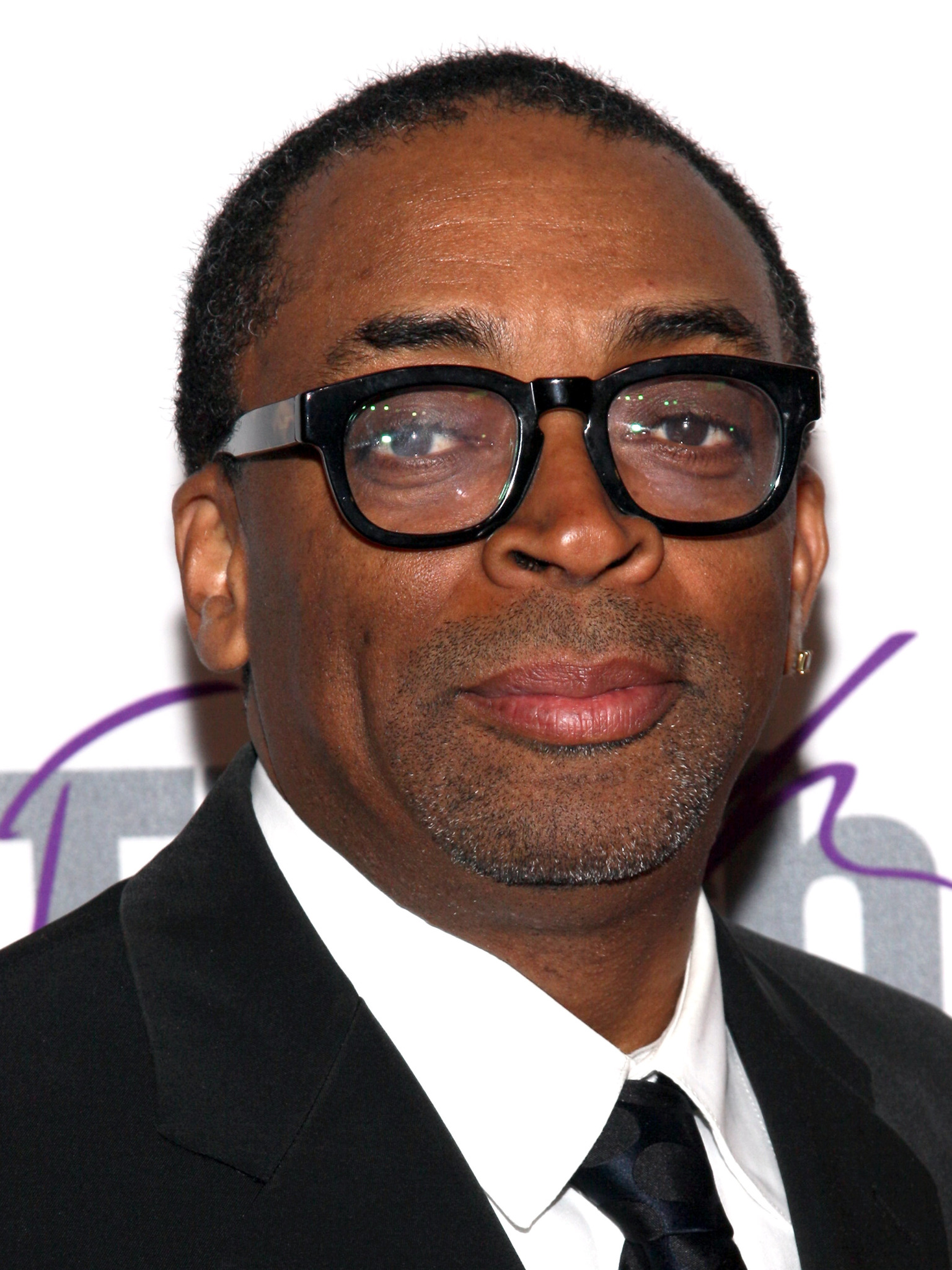
Physically, Spike Lee is often recognized for his distinctive style, which includes a penchant for bold fashion choices and signature eyewear. He typically sports a short hairstyle, which has varied throughout his career—sometimes styled with a flat top, other times more closely cropped. While he does not have prominent tattoos, Lee's appearance often reflects his artistic sensibilities, with clothing that highlights his personality and cultural influences.
Filmography Overview
Spike Lee's filmography is diverse and multifaceted, encompassing various genres, including drama, documentary, and comedy. He is known for his work that often centers on African American experiences and societal issues, employing a unique storytelling style that blends realism with artistic expression. Throughout his career, Lee has explored themes of race, identity, and social justice, leaving an indelible mark on the film industry.
His films often feature strong, complex characters and are characterized by their innovative cinematography and editing techniques. Lee's ability to weave personal narratives into broader social commentaries has made his work resonate with audiences worldwide.
Awards and Achievements
Spike Lee's contributions to film have been recognized through numerous awards and accolades. He has received multiple Academy Award nominations, including a long-awaited win for Best Adapted Screenplay for "BlacKkKlansman" in 2019. Additionally, Lee's work has been honored at various film festivals, including Cannes, where he received the Grand Prix for his outstanding contributions to cinema.
Lee's impact extends beyond his individual accolades; he has played a crucial role in paving the way for future generations of filmmakers, particularly those from underrepresented backgrounds. His commitment to storytelling that reflects the African American experience has inspired many and solidified his legacy as a transformative figure in the industry.
Legacy
Spike Lee's influence on cinema and culture is profound and enduring. He is celebrated not only for his artistic achievements but also for his commitment to social justice and activism. Lee's films challenge audiences to confront uncomfortable truths about race and identity, making him a vital voice in discussions surrounding these topics.
His legacy is characterized by his willingness to take risks and push boundaries in storytelling. Lee's work has opened doors for diverse narratives in Hollywood, encouraging a greater representation of voices and perspectives. As a filmmaker, he has set a standard for authenticity and engagement with social issues, making his contributions to cinema both significant and lasting.
In summary, Spike Lee remains an iconic figure in American cinema, known for his compelling storytelling, dynamic visual style, and unwavering commitment to addressing social issues. His work continues to inspire filmmakers and audiences alike, ensuring that his impact on the film industry will be felt for generations to come.
Net Worth
When diving into the financial world of Spike Lee, a filmmaker whose impact on cinema is as profound as his distinct style, you’ll notice a wide range of figures when it comes to his net worth. Websites like Celebrity Net Worth estimate his wealth to be around $50 million, while WealthyGorilla offers a slightly lower figure of approximately $40 million. TheRichest gives a more conservative estimate of $45 million. These discrepancies stem from several factors: the sources' methodologies, the lack of transparency in Lee's earnings from various projects, and the inconsistent nature of Hollywood's financial reporting. While these figures provide a general ballpark, they often fail to account for the nuanced earnings from his extensive filmography, television projects, and the broader cultural impact he has made over the decades.
To get a clearer perspective on Spike Lee's financial journey, it’s crucial to understand how actors typically earn their keep in Hollywood. For supporting actors, especially in the 1980s and 1990s, pay varied significantly, depending largely on the film's budget and the actor's billing position. In a world where competition is fierce, billing position often equated to negotiation power, allowing actors with top billing to command higher salaries. Additionally, film budgets play a significant role in salary determination; higher-budget films generally offer more lucrative paychecks. For instance, a supporting actor in a blockbuster may earn significantly more than a leading actor in a low-budget indie film.
When it comes to television, compensation per episode can also vary wildly based on the show's popularity and the actor's experience. For iconic figures like Spike Lee, who has transitioned from film to television and back again, these variables create a layered financial picture. While there’s no denying the creative genius behind his projects, understanding the mechanics of pay helps frame the economic realities of his career.
In the table below, I summarize some of Spike Lee's major films, their approximate budgets, and my estimated earnings for him based on the aforementioned factors.
```html
| Film Title | Approximate Budget | Estimated Earnings |
|---|---|---|
| She's Gotta Have It (1986) | $175,000 | $75,000 |
| Do the Right Thing (1989) | $4.5 million | $500,000 |
| Malcolm X (1992) | $33 million | $1 million |
| Inside Man (2006) | $45 million | $1.5 million |
| BlacKkKlansman (2018) | $15 million | $500,000 |
```
Starting with "She's Gotta Have It," Lee had a modest budget of around $175,000, yet it became a cultural touchstone, opening doors for him. I estimate his earnings from this project at $75,000, reflecting a typical salary for a director at that time. Moving to "Do the Right Thing," with a budget of $4.5 million, Lee's role as both director and lead writer likely secured him a paycheck of about $500,000, a significant leap that showcased his growing influence in the industry.
Then there’s "Malcolm X," a critically acclaimed film with a hefty budget of $33 million. Given the film's stature and Lee's increasing name recognition, I estimate he earned approximately $1 million, a number that aligns with industry standards for someone of his creative caliber at that time. "Inside Man" marked a further evolution in Lee's career, with a budget of $45 million. I pegged his earnings at around $1.5 million, considering his established reputation and the film’s box office success. Finally, "BlacKkKlansman," with a budget of $15 million, likely provided him with earnings of about $500,000, reflecting both his position as a veteran filmmaker and the film’s independent nature.
In addition to these films, Lee has also made a mark in television, contributing to various projects that probably compensated him around $50,000 to $100,000 per episode, depending on the show's success. Given his stature, it's reasonable to estimate that his total earnings from television roles could easily add up to several million over the years.
When you combine these estimates, we’re looking at a ballpark figure of approximately $3.6 million from just these five films. If we factor in his television earnings, potential endorsements, and other projects, it becomes clear that Spike Lee’s financial portfolio is robust. However, this analysis conflicts with the net worth figures from websites, which tend to simplify his financial standing and don’t account for the intricacies of his career.
In conclusion, blending these two sources—net-worth websites and my film-by-film analysis—gives a more nuanced picture of Spike Lee's financial standing. Based on the depth of his career, ongoing relevance in the industry, and the earnings from various media avenues, a realistic net worth for him might range between $45 million to $60 million. This range not only aligns with the figures from external sources but also acknowledges the creative and financial complexities that define Lee's journey in film and television.